Osprey Charging Website
A fast, modern website that tells the story of one of the UK's leading EV charging networks - built on a headless CMS to match Osprey's own tech stack.
| Client | Osprey Charging |
|---|---|
| UN SDGs | 07 Affordable And Clean Energy 09 Industry, Innovation And Infrastructure 13 Climate Action |
| Impact | United Kingdom |
| Technologies | API, Prismic.io, VueJS, NuxtJS, NodeJS |
01 Introduction
Osprey Charging provides EV drivers with high-power charging across a convenient, thoughtfully placed network throughout the UK. Their charging is fast, reliable, and easy to use, backed by long-term partnerships with landlords and local authorities. They're building the charging network for the future of transport — for the next generation and the planet.
Osprey approached us to build a new website, having first asked us to overhaul their branding. They wanted something modern, built on a headless CMS, with a tech stack that matched their other internal systems and app - and a clear move away from their previous WordPress site towards something that reflected their innovative, future-focused approach.
02 The Project
The goal was a visually striking website that communicated Osprey's mission and services clearly, with a seamless experience across every device. It needed to give visitors a full picture of the network - charging locations, services, and sustainability initiatives - while being easy for Osprey's own team to keep up to date.
We looked at several content management systems and chose Prismic for its ease of use, integrating it as a headless CMS so Osprey's team could manage and update content efficiently. The front end was built with VueJS and NuxtJS for a fast, responsive interface, with the design carrying Osprey's refreshed brand throughout - clean and modern, with strong imagery of electric vehicles and charging infrastructure, and straightforward navigation.
At the heart of the site is an interactive map of Osprey's charging locations, letting drivers find nearby stations and see detailed information at a glance. Around it sit clear descriptions of Osprey's charging solutions for home, work, and public locations, content highlighting their commitment to renewable energy and carbon offsetting, a blog for news and updates on EVs and clean energy, and a simple contact and support area. Throughout the build we focused on performance - minimising file sizes, using caching, and keeping the code lean - so the site stays fast and responsive whatever device it's viewed on.
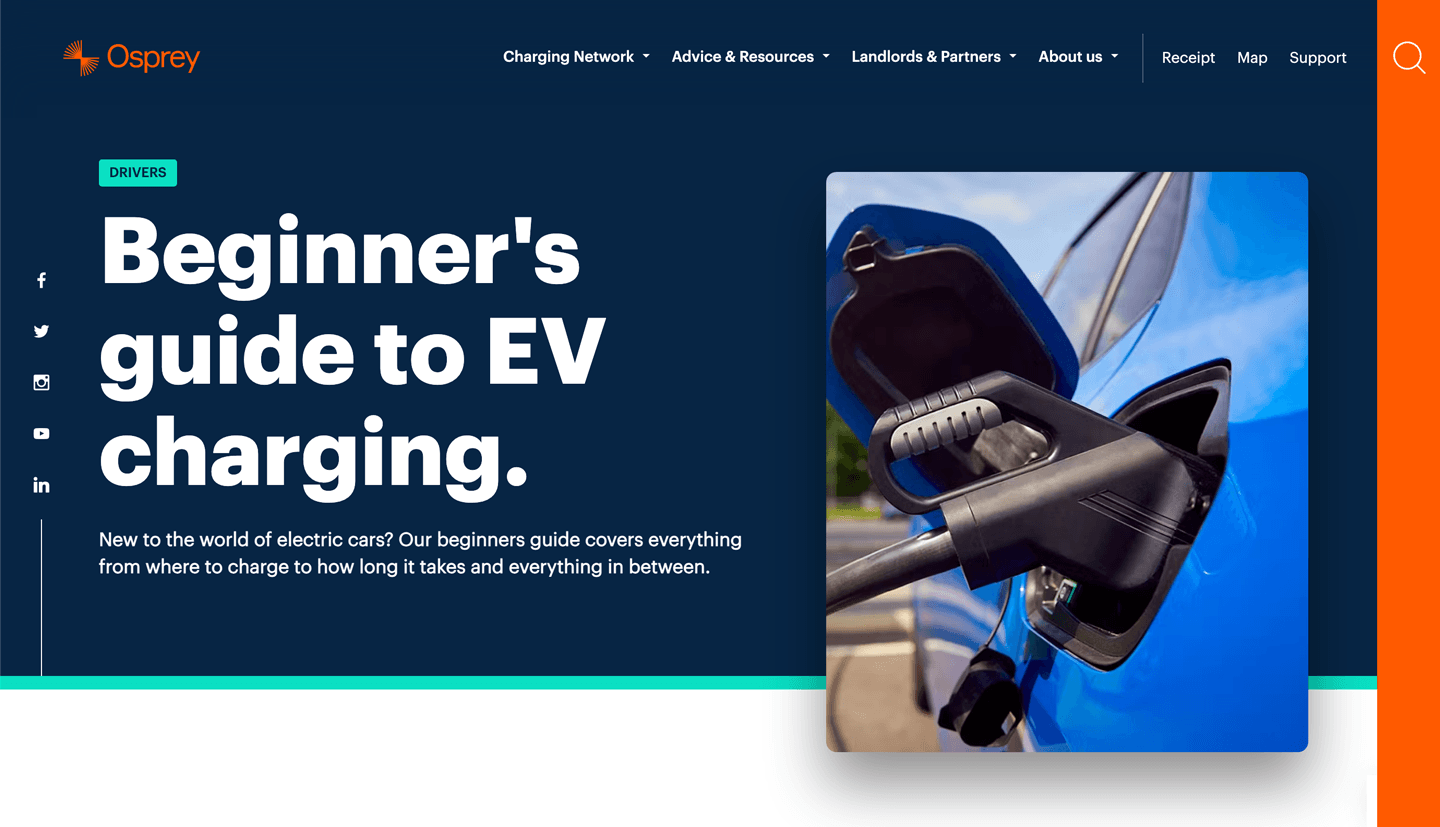
This "Beginner's guide to EV charging" page introduces newcomers to electric vehicles through a clear, welcoming hero. Tagged for drivers, it sets up a resource covering the essentials — where to charge, how long it takes, and everything in between — with top-level navigation into the charging network, advice, and support, plus quick links to receipts, the network map, and help.
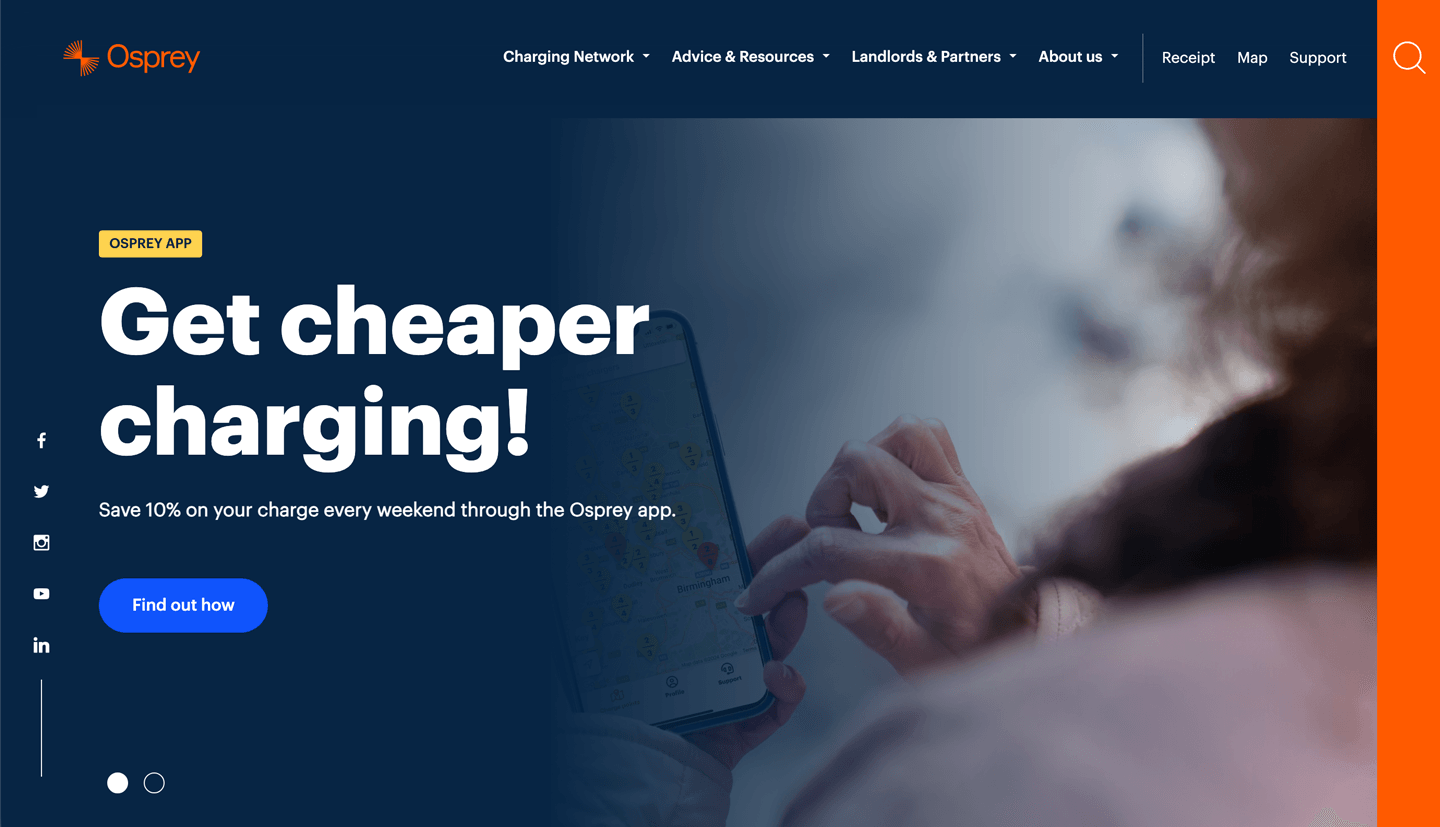
A rotating hero promotes the Osprey app and its weekend charging discount, with a clear "Find out how" route through to the details. The same top-level navigation runs across the top — charging network, advice, and support — alongside quick links to receipts, the map, and help, and pagination dots showing more slides to explore.
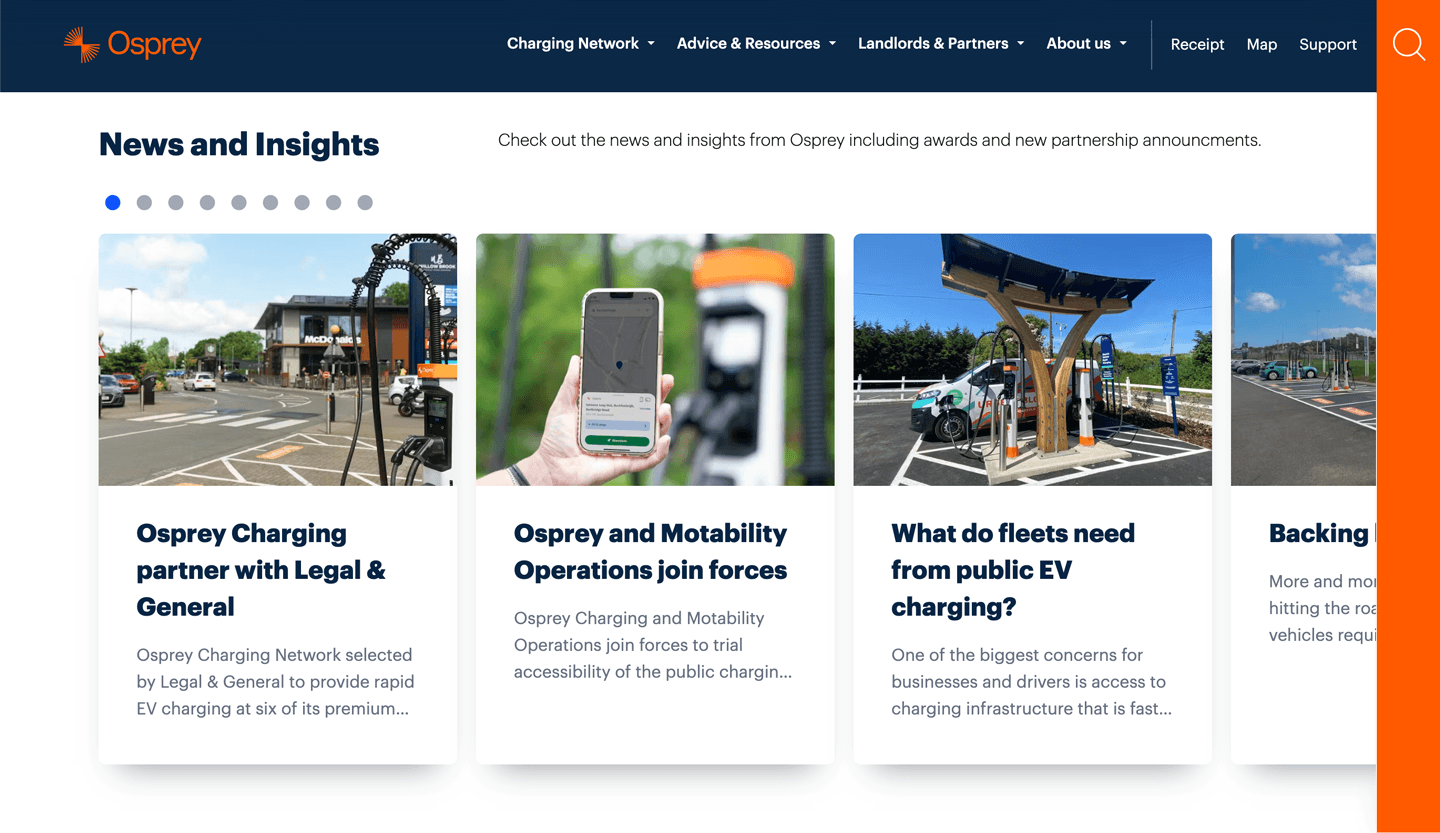
A "News and Insights" section keeps visitors up to date with Osprey's latest announcements - awards, partnerships, and industry perspectives. Stories are presented as a horizontally scrolling carousel of cards, each with an image, headline, and summary, and pagination dots below show how much more there is to browse.
03 Conclusion
The collaboration produced a visually captivating, informative website that gives Osprey a compelling home for its mission. The interactive map was well received, making it easy for drivers to find charging locations, and the responsive design delivered a smooth experience across devices - contributing to stronger engagement and longer visits. Following launch, Osprey reported improved brand visibility and an increase in user enquiries.
The project reinforced a few lessons: the value of clear communication between teams, the difference that careful performance optimisation makes to the user experience, and the benefits of modern frameworks and a headless CMS for streamlining both development and ongoing content management. The result is a digital presence that matches Osprey's role in the electrification of transport - and reflects the ambition of a company leading the way in sustainable mobility.